
A resident blames the mayor for a missed trash pickup and a stalled bill. So what does the mayor of Philadelphia do? The mayor runs the executive branch, appoints department heads, drafts the budget and can veto bills, but Council passes the laws.
This guide covers the executive office only. For the wider picture, start with how is philadelphia city government organized, then return here for the mayor’s side of it.
The mayor’s role under the Home Rule Charter
The Home Rule Charter, often called the city’s constitution, is the source of the mayor’s authority, according to Pew’s review of the charter. It gives the mayor three headline powers: appointing and dismissing department heads, preparing the city’s budget and vetoing legislation. The mayor is also responsible for the executive and administrative work of the city and for law enforcement within its boundaries, as Billy Penn’s job description of the mayor puts it.

Those are executive tools. The mayor administers, proposes and approves. Writing and passing city laws belongs to a separate branch, which is where most misunderstandings begin.
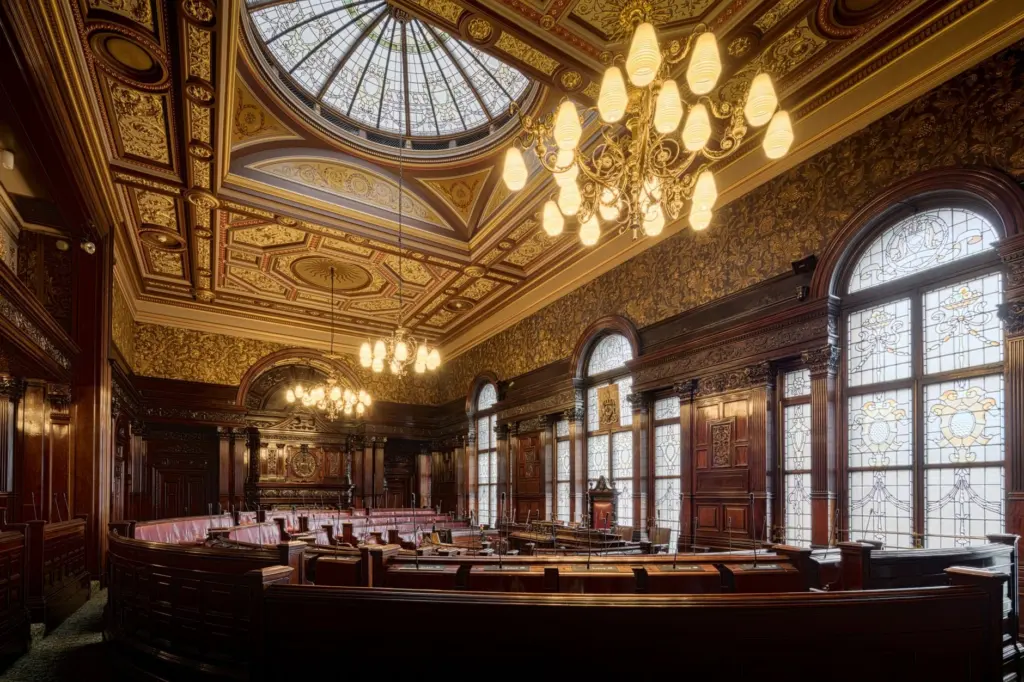
Cherelle Parker was inaugurated as the 100th mayor of Philadelphia on January 2, 2024, according to the Mayor’s Office page on phila.gov. The office sits in City Hall, which is also where the legislative branch meets, so the two branches share a building but not a job.
Common assumptions compared with the charter
| Common assumption | What the charter provides | Planning use |
|---|---|---|
| The mayor personally runs every department. | The mayor appoints and can dismiss department heads. A managing director, appointed by the mayor, oversees numerous departments. | For a service problem, think department first, mayor’s office last. |
| The mayor sets the budget alone. | The mayor drafts the budget. City Council reviews, amends and approves it. | Budget change needs Council, not only the mayor. |
| A veto is final. | A veto returns the bill to Council, and a two-thirds vote of Council can override it. | A vetoed bill is not necessarily dead. |
| A mayor can serve indefinitely if re-elected. | The limit is two consecutive four-year terms, with the option to run again after sitting out four years. | Expect turnover in the office at set intervals. |
These roles and limits come from Pew’s charter review and Billy Penn’s explainer on the mayor’s job.

The managing director and the departments
The managing director runs much of the day-to-day administration, so the mayor does not manage each department directly. The charter formally establishes the Office of the Managing Director, as Pew notes, and the mayor appoints the managing director unilaterally, per Billy Penn. The managing director oversees numerous city departments.

How the mayor and managing director differ
The mayor sets direction, makes the headline appointments and answers to voters. The managing director is the administrator beneath that, coordinating the departments the mayor’s agenda depends on. Neither is elected as a pair: the mayor is on the ballot, and the managing director is a mayoral choice.
Which departments report where
Department heads fall into two paths. The mayor appoints and can dismiss them under the charter. For the Police, Health, Fire, Streets and Parks commissioners, the managing director selects and the mayor approves, according to Billy Penn. The practical reading is that a commissioner is accountable up through the managing director to the mayor, not to Council.
This matters when you want something fixed. Public complaints about services usually belong with the department or a reporting channel, and the how to use philly 311 guide is the practical starting point for a specific problem. For routine collection questions, the philadelphia trash pickup schedule page is a better stop than the mayor’s office.
Working with City Council on laws and the budget
The mayor and City Council are separate branches that need each other. Council has 17 seats, 10 of them district seats and seven at-large, with four-year terms and no term limits for members, per Pew. That contrast with the mayor’s limit means Council can hold deeper institutional memory than the executive.
Signing and vetoing bills
When Council passes a bill, the mayor can sign it into law or veto it and send it back. A veto returns to Council with written reasons, and Council can override within a week, according to Billy Penn. The override threshold is a two-thirds vote of Council, per Pew. The mayor can also call a special Council session when public necessity requires.
The mayor’s office also publishes fiscal notes, which, according to the Mayor’s Office, explain how proposed legislation could affect the city’s budget. They are a useful read before judging a bill’s likely reception.
The operating budget
The mayor drafts and proposes an operating budget and a capital budget for the next fiscal year, and Council reviews, amends and approves them, per the same sources. Appropriations are made in lump sums by broad category for each department. Council therefore cannot dictate exact department spending or make the mayor spend money. In practice, Council shapes totals and categories, and the executive controls how funds are used within them.
Term limits and the mayoral election cycle
A Philadelphia mayor serves four-year terms and is limited to two in a row. Pew’s summary adds that a former mayor may run again after sitting out four years, so the limit is on consecutive service, not a lifetime ban.
For voters, the limit means a sitting mayor cannot count on a third straight term. A mayor in a second term has a defined window to finish priorities, and candidates for an open seat compete without an incumbent.

Frequently asked questions
| Question | Answer |
|---|---|
| What is the Home Rule Charter? | It is the city’s governing document, adopted on April 17, 1951, and often called the city’s constitution. Its 12 articles contain 72 chapters, and a 1949 state law let Pennsylvania cities with more than 1 million residents draft one, per Pew. |
| Who is eligible to be mayor? | A candidate must be at least 25 years old and a U.S. citizen, and must have lived in Philadelphia for three years or more, according to Billy Penn. |
| Where is the mayor’s office? | It is at City Hall, Office 215, Philadelphia, PA 19107, and the phone number is (215) 686-2181, per the Mayor’s Office. |
| What priorities did the current mayor start with? | Mayor Parker’s 100-day action plan focused on public safety, Clean and Green, housing, economic opportunity and education, according to the Mayor’s Office. |