
| Topic | What the department publishes | Planning use |
|---|---|---|
| Scale | About 1,000 staff, a $350 million budget and 13 programmatic divisions (posted May 27, 2025) | A large employer with many entry points, so look beyond the division you already know. |
| Clinics | Eight city-run health centers in neighborhoods throughout Philadelphia | Residents can look for the nearest centre. Graduates can see where clinical work happens. |
| Walk-in care | Health Center #1 is a walk-in clinic for STI testing and treatment | The route for residents who need testing without an appointment. |
| Fees | A small fee based on family size and income, plus help with health insurance | Ask about the sliding fee and insurance help before assuming cost is a barrier. |
| Data | Anyone can request Philadelphia health data; formal research requests may be reviewed | Allow added review time for formal research projects. |
| Office | Ambulatory Health Services: 1101 Market Street, 11th Floor, Philadelphia PA 19107 | A fixed address for correspondence about the department’s clinical services. |
Figures come from the department’s contact and divisions page and a PHENND listing of the Deputy Health Commissioner job.
What does the Philadelphia Department of Public Health do? It protects and promotes the health of all Philadelphians and provides a safety net for the most vulnerable, running health centers, disease control, environmental health and laboratory services.
The department is one agency within a wider city structure, which the guide on how is philadelphia city government organized lays out. The sections below follow the order a new graduate would work through: purpose, clinics, divisions, data, then applying.
Start with the department’s purpose
The Philadelphia Department of Public Health works for residents in two ways. It protects population health through disease control, inspections and monitoring, and it provides a safety net through direct services. Its About us page states the mission in those terms and traces the city’s role back to free hospital care for its poorest residents at the Philadelphia Almshouse, built in 1732.
That history explains why the department mixes clinical care with regulation and data work. It also matters for job seekers.
- Read the mission and history on the department’s About us page so your application language matches how the agency describes itself.
- List the divisions that relate to your degree or coursework.
- Keep a shortlist of two or three to target, rather than applying broadly without a reason.
Next, see the health centers
For most residents, the visible face of the department is its network of clinics. The department operates eight city health centers in neighborhoods throughout Philadelphia. The PHENND listing describes the same network as eight primary care clinics. The centers charge a small fee based on family size and income, and staff help patients with health insurance.
Residents should treat the sliding fee as a reason to ask, not a reason to delay care. Anyone needing STI testing without an appointment can use the walk-in clinic described in the FAQ below. The department’s Ambulatory Health Services office is at 1101 Market Street, 11th Floor, Philadelphia PA 19107.
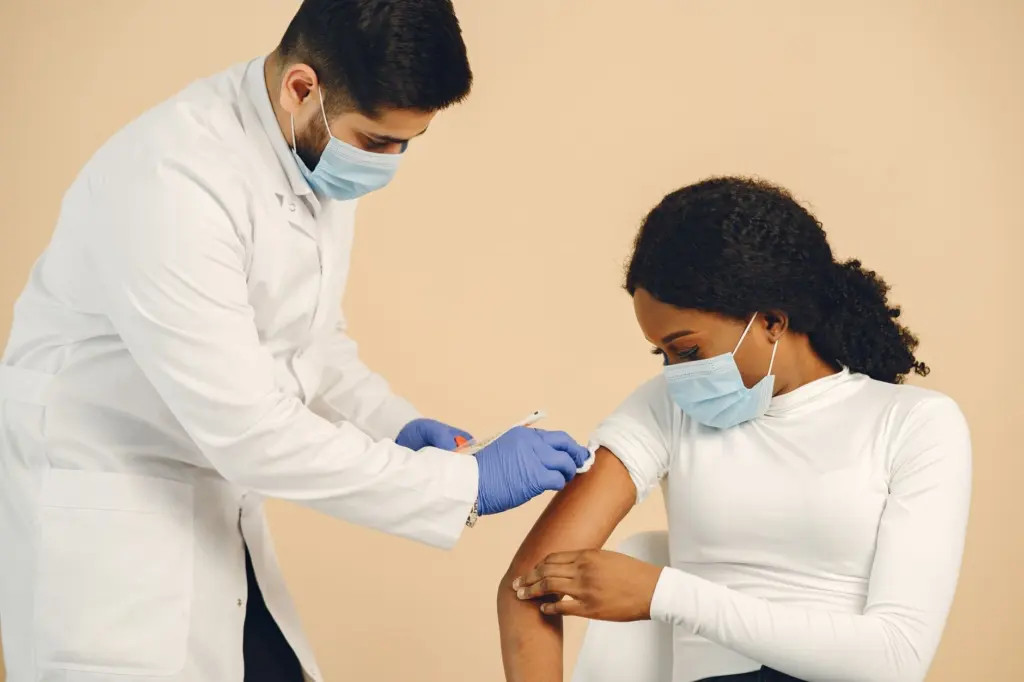
For graduates, the clinics are the most patient-facing part of the department. They suit people who want direct contact with the public and who are comfortable explaining insurance and fees to patients. If your strengths are analysis or science, the divisions in the next section may fit better.
Then match divisions to roles
The department’s divisions go well beyond clinics. The table below pairs several with the kind of graduate background that could plausibly fit. The right-hand column is a judgement about fit, not a list of open jobs. Titles and requirements vary by posting.
| Division or program | What it does | Who it may suit |
|---|---|---|
| Disease Control, including Epidemiology and Informatics | Works to prevent, control and report on diseases and conditions | Graduates with statistics, surveillance or data skills. |
| Environmental Health Services | Food Protection, Lead and Healthy Homes, Vector Control and Environmental Engineering | Graduates who prefer field-based, regulatory work. |
| Laboratory Services | Performs a wide range of public health testing, including for outbreak investigations | Science graduates comfortable with laboratory procedures. |
| Air Management Services | Monitors air pollutants, enforces city, state and federal air quality regulations, and issues permits and licenses | Environmental science or policy graduates. |
| Medical Examiner | Determines the cause and manner of death for sudden, unexpected and unnatural deaths | A specialised unit. Check each posting for its qualification requirements. |
The division descriptions are drawn from the department’s divisions page.
Environmental health and field work
Environmental Health Services covers the work residents notice most often in daily life, from food safety to lead and pests. Its Food Protection program fits graduates who want an inspection-style role, and Vector Control and Lead and Healthy Homes suit people interested in housing and community conditions. Its director is listed with an M.P.H.

For graduates thinking about further study, that listing makes a Master of Public Health (MPH) a credential worth considering for long-term progression. Whether a specific posting requires it is stated in the posting itself.
Epidemiology and surveillance
Epidemiology is the study of how diseases and health conditions spread through a population. In the department it sits inside Disease Control, in the Epidemiology and Informatics program. This is the natural home for graduates who enjoy working with datasets, and the next section shows where that work becomes public.
Then locate the data
Public health data in Philadelphia comes through several channels. The department’s substance use work is a clear example: it manages and analyzes data on local drug use and its consequences, including overdoses, to inform City policy. The department also states that anyone can request Philadelphia health data, including members of the public.

- Start with the department’s data request route if you need Philadelphia health figures that are not already published.
- Check broader city datasets through the guide to the Philadelphia open data portal and city dashboards, which covers data across agencies.
- Plan for review if your request is formal research. The department says the IRB and the Health Commissioner Office Review Committee may need to review such requests.
For a job seeker, browsing these data products is also useful preparation. It shows which health topics the department tracks and gives you concrete material to mention in an application or interview.
Finally, apply for a city public health job
City postings point applicants to an online application. The PHENND listing for the Deputy Health Commissioner role directs readers to a “Learn more and apply” link. That job is the second most senior position in the department, so it is not an entry-level target. The listing still shows how postings are written: it asks for supervisory, organizational, interpersonal communication, writing and analytical skills.

- Choose a target division from the table above and note the skills its work implies.
- Find the current posting and open its “Learn more and apply” link, rather than relying on a summary elsewhere.
- Read the stated requirements closely. Civil service and credential requirements are set per posting.
- Match your application to the listed skills with concrete examples from coursework, volunteering or internships.
Once hired, new staff are supported by the department’s Human Resources unit, which provides ongoing support to current employees and new hires.
If no entry-level posting fits
Entry-level and internship openings change, and the department does not list them in one fixed place that this guide can point to. If nothing matches today, widen the search to adjacent divisions. A graduate drawn to epidemiology could also look at laboratory or environmental roles. Checking back periodically is more productive than applying to unrelated postings.
Frequently asked questions
When was the Department of Public Health created?
The present department was created by an Ordinance of December 31, 1919, according to the city’s About us page.
Where can residents get walk-in STI testing?
Health Center #1 is described by the department as a walk-in clinic for STI testing and treatment.
Is the Deputy Health Commissioner an entry-level job?
No. The posting describes it as the second most senior position in the department and asks for strong supervisory and organizational skills.
How big is the department?
A posting dated May 27, 2025 describes about 1,000 staff and a budget of $350 million.