Philadelphia water bill assistance depends on the problem: the Tiered Assistance Program bases a water bill on income, the HELP loan funds pipe repairs, and a UESF utility grant helps with PWD and PECO bills.
Picture a rowhouse owner whose water bill has outgrown the household budget in the same month a heating bill arrives. Each program below answers a different version of that problem, so matching the problem first avoids applications that go nowhere. If you are unsure which city office runs which service, start with how is philadelphia city government organized.
When the water bill is too high to pay
A water bill that is simply more than your income can cover is the problem the Tiered Assistance Program was built for. It is the first call for most lower-income households because it changes the bill itself rather than covering a single payment.
Tiered Assistance Program
The Tiered Assistance Program bases the water bill on income. It is meant for customers with lower incomes and for those experiencing special hardships. That second group matters: a household that is not low-income on paper may still have a case if a hardship, rather than a steady shortfall, is the reason the bill went unpaid.
The program has a dedicated hotline, (267) 443-2500. Ask there which income cutoff applies to your household size, because that cutoff is what decides whether you qualify. Do not assume the thresholds used by other programs apply to this one.
UESF utility grant for PWD bills
The Utility Emergency Services Fund (UESF) runs a utility grant program with separate rules for water and electric help. For Philadelphia Water Department (PWD) assistance, household income must be at or below 300% of the current federal poverty guidelines. For PECO assistance the limit is 150%.
The grant maximums are $3,000 for PWD and $1,250 for PECO. Treat those as ceilings, not as amounts you should expect. The practical point is the gap between the two income limits. A household above the PECO limit but at or below the PWD limit can still be eligible for water help, so a turned-down electric request does not rule out a water grant.

Both options address the same overall difficulty from different angles. Households that struggle every month have a stronger case for an income-based bill. Households facing a one-off shortfall are better matched to a grant, although the program rules decide the outcome.
Repairs on pipes you own
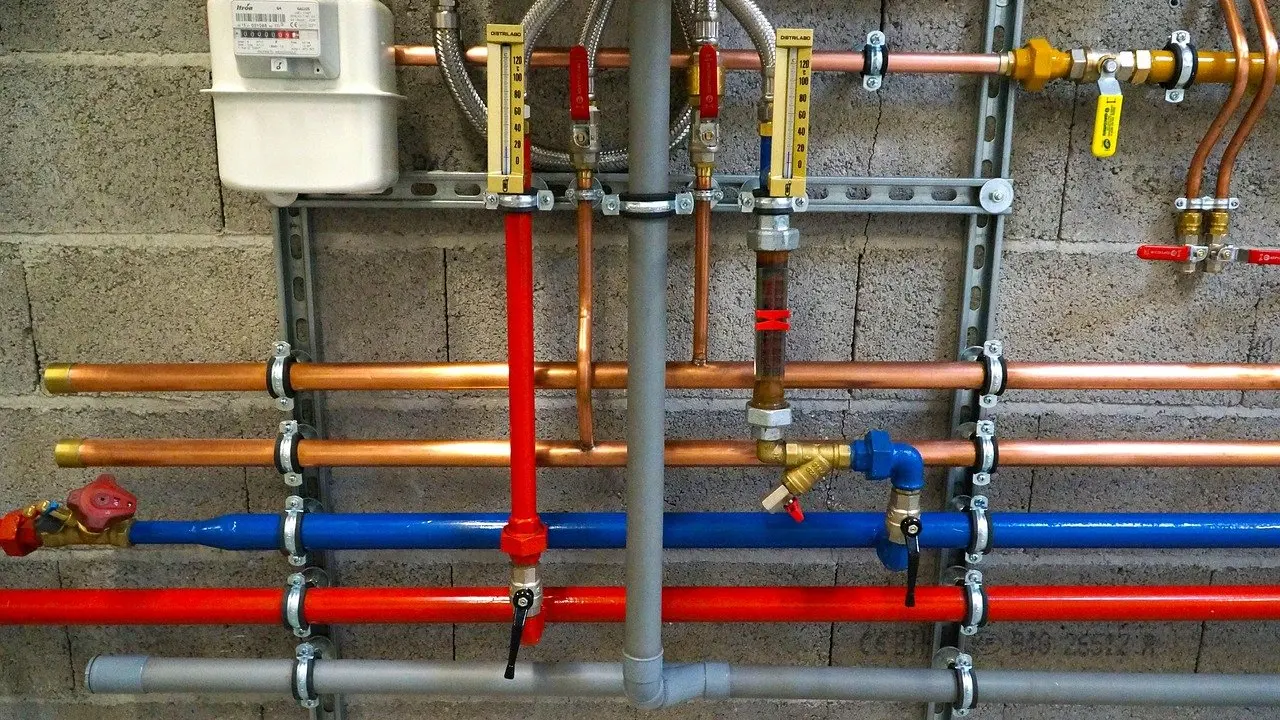
A high bill is not always an affordability problem. PWD customers are responsible for repairing the pipes that run from the city mains to their homes, according to the City’s Homeowners Emergency Loan Program (HELP) page. When one of those lines fails, the repair cost lands on the owner.
HELP offers zero-interest loans for repairs to water service lines and sewer lines. Borrowers have 60 months to pay off the loan. That suits owners who can manage a modest monthly payment but cannot find a lump sum for an emergency excavation.
The property must be residential and contain no more than four units. Owners of larger buildings should plan for another financing route, since HELP is built around small residential properties.
Owners who are also managing other city obligations may find it useful to read the philadelphia property tax guide alongside this one. A repair loan, a tax bill and a water bill all compete for the same monthly budget.
Which program fits your situation
The table below sorts the common situations into the program that addresses them. Use it to decide which contact to try first.
| Your situation | Program | What it provides | First step |
|---|---|---|---|
| The water bill is hard to pay on your current income | Tiered Assistance Program | A water bill based on income for lower-income customers or those with special hardships | Call the hotline at (267) 443-2500 |
| A water service line or sewer line needs repair | HELP | A zero-interest loan for repairs to those lines | Call PWD at (215) 685-4901 |
| The charge itself looks wrong | Bill dispute | A review of the charge, which is separate from help with affordability | Gather the bill and account details, then contact the utility that issued it |
Program details in the table come from the Tiered Assistance Program listing and the City’s HELP page.
Heating and energy aid: LIHEAP first
Heating help runs through LIHEAP, the federal Low Income Home Energy Assistance Program. In Philadelphia it also affects the order in which you should apply for other grants. UESF states that during the LIHEAP season, applicants must have applied to the LIHEAP Cash and Crisis program first before the UESF utility grant will be considered, as described on its utility grant page.

That requirement gives a clear sequence for anyone asking how to apply for LIHEAP in Philadelphia and what comes next.
- Apply to LIHEAP Cash and Crisis as soon as the LIHEAP season is open, since the UESF grant depends on it during that season.
- Apply for the UESF utility grant once the LIHEAP application is in. Questions about that grant go to [email protected].
- Check the income limit that applies to the bill you want help with, because the limit differs by utility.
Confirm the current LIHEAP season dates and application channel directly with the program before you plan around a deadline. A grant request sent too early or in the wrong order is the most avoidable reason for delay.

Applying and contact details
Most delays come from calling the wrong office, so keep these contacts together before you start.
- Tiered Assistance Program: the hotline is (267) 443-2500, listed on the Philadelphia tenant resource page.
- HELP repair loans: call the Philadelphia Water Department at (215) 685-4901, the number given on the City’s HELP page.
- UESF utility grants: email [email protected] with questions about the grant program.
For water bill help, Vision for Equality notes that you can apply on the program’s website or by mail. Choose mail if you do not have reliable internet access, and keep a copy of whatever you send.
Disputing a water bill
A dispute and an assistance request are different things. Assistance programs address whether you can afford a bill or fund a repair. A dispute asks whether the charge is correct. If your question is the second one, contact the utility that issued the bill rather than a grant program.
Before you call, gather the bill, your account number and any notes about recent changes at the property. Then check whether the problem might sit on your side of the connection. Because customers are responsible for the pipes between the city main and the house, a problem there is an owner repair that HELP may fund, not a billing error for the utility to correct.
If you are behind while you sort out a disputed charge, ask the utility about assistance programs at the same time. The two requests can run side by side.
Other city services to check
Utility bills are only part of the monthly cost of running a home in the city. For collection days and street services that sit outside the water bill, see the philadelphia trash pickup schedule guide.
Frequently asked questions
| Question | Answer |
|---|---|
| How often can I get a UESF utility grant? | Families and individuals can apply every two years, according to UESF. Plan the request for when you need it most. |
| Does the HELP loan charge interest? | No, it is interest-free unless payments are missed, and borrowers have 60 months to repay, per the City of Philadelphia. |
| Can I get a HELP loan if I am behind on my water bill? | Only if you are not delinquent on your monthly water bills for more than 2 cycles, according to the City’s HELP page. |
| How soon will PWD respond to a HELP application? | PWD will reach out within two business days, as stated on the City’s HELP page. |